Room Addition vs Second Story: Which Is Worth It?
Room addition or second story? Compare costs, disruption, ROI, and when each makes sense. Real numbers for a 400 sqft project in 2026.
Quick Answer: A ground-floor room addition typically costs 25–40% less than a second story and causes far less disruption. Second stories make sense when your lot has no room to expand or when you need to preserve yard space. Use our home addition cost calculator to compare both options for your specific situation.
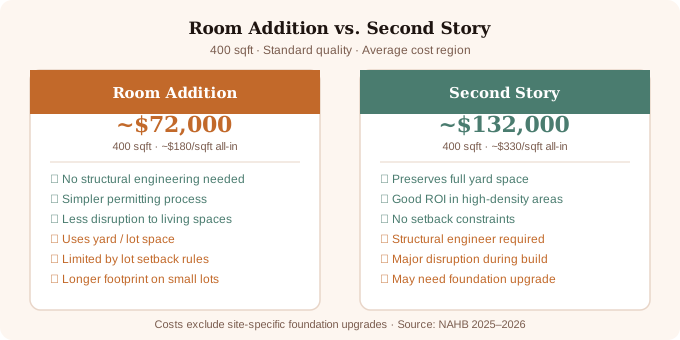
Adding space to a home comes down to one of two options: build out or build up. Both add the square footage you need, but they have very different costs, timelines, disruption levels, and effects on your property value. Making the right choice depends on your lot, your budget, and your home's structural condition.
The Cost Difference Is Significant
For a 400 sqft addition at standard quality in an average-cost US market, here's what you're looking at:
Ground-floor room addition: $72,000–$96,000 This includes framing, roofing, insulation, drywall, flooring, windows, electrical, permits, and foundation work. The foundation is the big variable, on a flat, well-drained lot, a standard perimeter foundation runs $10,000–$18,000 for a 400 sqft addition. On a sloped lot or unstable soil, that number can triple.
Second story addition: $110,000–$180,000 The same 400 sqft addition built vertically costs 40–85% more. The key drivers:
- Structural engineering and assessment: $1,500–$5,000 for the evaluation alone, plus any remediation costs if your foundation or first-floor framing needs reinforcement.
- Foundation reinforcement: If your existing foundation wasn't designed for a second story (common in homes built before 1980), you may need piers, additional footings, or wall reinforcement, $15,000–$50,000 extra.
- First-floor disruption: Building a second story requires removing the existing roof and opening up the ceiling. Your home is effectively open to the elements during framing, which means you'll likely need temporary housing for 4–8 weeks.
- Staircase: A properly sized interior staircase consumes 80–120 sqft of first-floor space and costs $3,000–$15,000 depending on style.
Use our free home addition estimator to run the numbers on both scenarios for your location and quality level.
When a Ground-Floor Addition Makes More Sense
A ground-floor room addition is the right choice in most situations, when you have the lot space for it.
You have a usable side or rear yard. The most common situation. If your lot has 15+ feet of clear space on one side or in the rear (accounting for setback requirements), a ground-floor addition is almost always cheaper and faster.
Your budget is fixed. Ground-floor additions have fewer cost unknowns. You don't have structural engineering surprises, your living space isn't disrupted during construction, and permitting is typically simpler.
You're in a single-story neighborhood. A second story on a ranch house surrounded by ranch houses may not add as much resale value as it would in a neighborhood of two-story homes. Buyers pay a premium for consistency with the neighborhood norm.
The addition connects naturally to your floor plan. Adding a room at the rear of the house can flow directly from the kitchen or living area. Second stories require vertical access (stairs) that often consumes valuable first-floor space.
Timeline matters. A 400 sqft room addition typically takes 8–12 weeks. A second story addition of the same size takes 12–20 weeks, partly because structural work and roof removal add complexity.
When a Second Story Makes More Sense
Building up is the right call in specific circumstances.
Your lot has no room to expand. In dense urban and suburban neighborhoods, setback requirements from the city or county often limit how far out you can build. A 5-foot side setback and a 15-foot rear setback on a small lot may leave no viable footprint for a ground addition that actually adds useful space.
You need to preserve your yard. Families with children or strong landscaping investments often prioritize keeping yard space. A second story adds square footage without touching the ground footprint.
You're in a high-density area where ROI is strong. In markets like Boston, Seattle, or Washington DC, second stories often recoup 55–70% of their cost at resale because buyers expect multi-story homes. In those same markets, a ground addition might recoup less because buyers already have yard space as a priority.
You want to expand the footprint of multiple rooms. A second story can effectively double your living space. If you need a master suite plus two additional bedrooms plus a home office, a second story delivers more square footage per dollar of overhead cost (roofing, framing) than multiple separate ground additions.
The Disruption Factor
This is where many homeowners underestimate the second story option. Adding a second story to an occupied home means:
- Roof removal exposes the entire first floor to weather. Contractors use tarps, but rain delays and moisture intrusion are real risks.
- Interior columns and shoring block rooms for weeks during structural work.
- Construction dust penetrates everywhere on the first floor, expect to pack up and store valuables and furniture.
- Most families relocate for 4–8 weeks, adding $4,000–$16,000 in temporary housing costs to the project.
A ground-floor room addition is built outside your existing walls. You seal the connection point after framing is complete. The disruption is limited to the final few days when the opening between the old house and the addition is cut.
Structural Checklist Before Deciding
Before committing to a second story, have a structural engineer assess:
- Foundation capacity, depth, width, and reinforcing steel of existing footings
- First-floor framing, whether joists are sized to carry the added load of a second floor
- Load-bearing walls, which first-floor walls can support a second story without additional posts and beams
- Soil conditions, bearing capacity, settlement risk
This assessment costs $1,500–$5,000 and is money well spent before you commit to a $150,000 project. Many second story projects have discovered mid-construction that foundation work was needed, at significant cost and schedule impact.
ROI Comparison by Market
According to Remodeling Magazine's Cost vs. Value Report, ground-floor room additions recoup 45–55% of their cost at resale in most markets. Second stories in high-density urban markets can recoup 55–70%, more than ground additions in those same markets because square footage commands a higher premium.
In suburban and rural markets with plenty of land, ground additions often deliver similar or better ROI at a lower absolute cost. For a full ROI analysis by addition type, see our home addition ROI guide.
Making the Decision
Run the actual numbers before deciding. A ground-floor addition at $85,000 that recoupes 50% ($42,500) might be a better financial decision than a second story at $145,000 that recoups 60% ($87,000), especially when you factor in the disruption cost and timeline.
But for a family that desperately needs the space, can't expand their footprint, and plans to stay in the home for 10+ years, the second story often makes sense regardless of the ROI math.
Try our calculator to compare both scenarios with your specific inputs. Then check our cost breakdown guide to understand exactly where the money goes in either scenario.