How Much Does a Bathroom Addition Cost? (2026)
Bathroom addition costs range from $28,000 to $120,000+ in 2026. See real breakdowns by size, quality, and location, and what drives the price up.
Quick Answer: A bathroom addition costs $28,000–$65,000 for a standard 80–100 sqft half or full bath at standard quality in an average US market. Primary bathrooms with premium finishes run $80,000–$120,000+. Use our home addition cost calculator to estimate your specific project.
Adding a bathroom is one of the most impactful home improvement projects you can make, both for daily use and for resale value. But it's also one of the most expensive additions per square foot, running 50–100% more than a bedroom addition of the same size. That premium is almost entirely driven by plumbing.
What a Bathroom Addition Actually Costs
Bathroom additions cost $200–$350 per square foot at standard quality in an average-cost US market. Here's what that looks like at different sizes:
| Bathroom Size | Standard Quality | Premium Quality |
|---|---|---|
| Half bath (35–50 sqft) | $18,000–$28,000 | $32,000–$48,000 |
| Full bath, 3-piece (60–80 sqft) | $28,000–$45,000 | $48,000–$72,000 |
| Full bath, standard (80–100 sqft) | $38,000–$60,000 | $62,000–$90,000 |
| Primary suite bath (120–160 sqft) | $60,000–$90,000 | $95,000–$140,000 |
In high-cost markets like Boston, Seattle, or Chicago, multiply by 1.3. In very high-cost areas like San Francisco or New York City, multiply by 1.6.
Run your specific project through our bathroom addition cost estimator to get a more accurate figure for your location and finish level.
Where the Money Goes
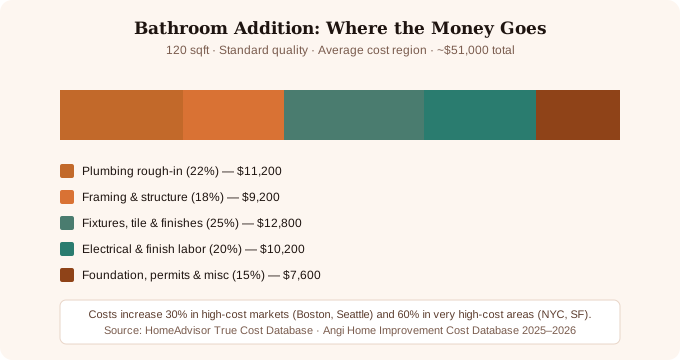
Looking at a 120 sqft bathroom addition at standard quality (~$51,000 total), here's how costs break down:
Plumbing rough-in and finish work: 22% (~$11,200) This is the single biggest cost driver that separates bathroom additions from other addition types. You're paying for:
- Supply lines (hot and cold) from your main lines to the new bath
- Drain lines sloped properly to the main stack or a new stack
- A vent stack (required to prevent sewer gas backup)
- All fixture connections (toilet flange, shower pan, vanity drain)
- Licensed plumber hours, typically 40–80 hours for a full bath addition
Framing and structure: 18% (~$9,200) This includes floor framing (often reinforced to carry tile weight), wall framing, and any structural modifications needed to create the addition footprint.
Fixtures, tile, and finishes: 25% (~$12,800) At standard quality:
- Toilet: $200–$600
- Vanity and sink: $400–$1,200
- Shower or tub: $600–$2,000
- Tile (floor and walls): $4–$12 per sqft installed
- Hardware, mirrors, accessories: $300–$800
At premium quality, these figures roughly triple. A designer freestanding tub alone can run $2,000–$8,000.
Electrical and finish labor: 20% (~$10,200) GFCI outlets (required by code near water), exhaust fan (required by code), vanity lighting, recessed lighting, and all electrical rough-in. Some jurisdictions also require a dedicated 20-amp circuit for the bathroom.
Foundation, permits, and miscellaneous: 15% (~$7,600) New addition footings plus the building permit. Permit fees typically run $800–$2,500 for a bathroom addition, plus inspection fees.
Key Cost Variables
Distance from Existing Plumbing
The single biggest variable in bathroom addition cost that most online calculators miss. If your new bathroom is directly above or adjacent to existing supply and drain lines, running connections is straightforward, maybe 20–30 linear feet of pipe.
If the addition is at the opposite corner of the house from your main plumbing stack, you may need 60–100+ feet of new drain lines sloped at 1/4 inch per foot. That's a lot of material and a lot of labor hours.
Ask your plumber to assess this specifically before committing to a budget.
Ground vs. Upper Floor
Ground-floor bathroom additions have straightforward drain routing, pipes can go under the slab or through a crawl space to the main drain. Second-floor bathrooms require running drain lines through finished first-floor ceilings, which often means opening up ceilings and walls you'd prefer not to touch.
Wet Room vs. Tub/Shower Combo
Full tile wet rooms (where the entire shower area is tiled, no shower door or curtain) cost $3,000–$8,000 more than a standard tub/shower combination. They require a custom waterproofing membrane, precision tile work, and often a linear drain. Beautiful, but not cheap.
Heated Floors
Electric radiant heating under tile is one of the most popular bathroom upgrades. It adds $600–$2,000 to the installation cost for a typical bathroom floor, and about $5–$15 per month to the electric bill.
What Most People Forget to Budget
HVAC: Bathroom additions need heating. Most contractors include duct extensions or a baseboard heater in the base bid, but verify this. A ductless mini-split for a bathroom addition adds $1,500–$3,500.
Ventilation fan: Required by building code in most jurisdictions for bathrooms without a window. A quality exhaust fan with lighting runs $150–$400 installed.
Plumbing wall: If your new bathroom shares a wall with the existing structure, that wall often becomes a "plumbing wall", thicker than standard to accommodate drain stacks. Factor this into your floor plan.
Ceramic vs. porcelain vs. natural stone: This choice alone can swing the tile budget by $5,000–$15,000 on a full primary bath. Ceramic tile starts at $2–$5/sqft installed. Large-format porcelain runs $8–$18/sqft. Natural stone (marble, travertine) goes $15–$40/sqft installed.
The Permit Process
Bathroom additions require a building permit in virtually every US jurisdiction. The permit covers:
- The new structure (framing inspection)
- Rough plumbing (before walls are closed)
- Rough electrical (before walls are closed)
- Final inspection (certificate of occupancy)
Skipping permits is a serious mistake. Unpermitted plumbing work creates liability if a pipe fails, and unpermitted additions complicate home sales. Some lenders won't finance a home with unpermitted work. Read our home addition permit guide to understand what the process looks like.
Is a Bathroom Addition Worth It?
A bathroom addition typically recoups 50–60% of its cost at resale, according to Remodeling Magazine's annual Cost vs. Value Report. That's lower than some people expect. But the calculation changes significantly if:
- Your home only has one bathroom. Going from 1 to 2 baths adds disproportionate value, this is one of the most requested buyer upgrades in most markets.
- You have multiple bedrooms relative to bathrooms. A 4-bedroom, 1-bathroom home is a tough sell. Adding a second bath changes the math dramatically.
- You plan to live in the home for 5+ years. You'll recoup value not just at sale but through years of daily use.
For a full analysis of which additions provide the best return, check out our home addition ROI guide.
Getting Started
Before contacting contractors, get a rough figure from our home addition calculator. Select "Bathroom Addition," enter your planned square footage, and choose your quality level and region. That gives you a budget range to share with contractors when requesting bids, and helps you recognize whether a bid is in the right ballpark.
Aim for 3 bids from licensed general contractors (not just plumbers, you want someone who manages the whole project). The spread between high and low bids on a bathroom addition is commonly 25–40%.